Is AI customer support the same as replacing agents?
No. In most good deployments it reduces repetitive work and speeds up handling while keeping agents in control of ambiguous or high-risk cases.
Definition · support ops
AI customer support is the use of AI systems to help answer, classify, draft, summarize, route, or resolve customer conversations. In practice, the best early deployments are assistive or semi-automated, not fully autonomous.
The short answer
The useful question is not whether AI can answer customers. It is whether it can answer the right subset of customers safely, quickly, and with a clear handoff path when the answer is not obvious.
Buyer fit
Breakdown
Handle repetitive questions, classify intent, summarize threads, suggest responses, pull order or account context, and route issues to the right team faster.
Refund disputes, emotionally sensitive problems, unusual account issues, policy exceptions, and anything where a subtle mistake can damage trust.
Clear confidence boundaries, human escalation, visible context, and strong knowledge sources matter more than fancy branding around the bot.
Lower repetitive load, faster response, fewer dropped tickets, and better human focus on complex customer situations.
What breaks first
What the workflow should do
Representative proof
The AI Customer Support service already positions assistive and semi-automated support as the practical first deployment model. This page turns that commercial idea into a high-intent educational page for discovery queries.
See AI Customer SupportBest next step
Usually strongest when the team wants grounded reply assistance, classification, routing, and safer customer-facing automation.
Choose this when the bigger problem is internal queue operations rather than the broader customer-support system.
FAQ
No. In most good deployments it reduces repetitive work and speeds up handling while keeping agents in control of ambiguous or high-risk cases.
Usually ticket triage, thread summarization, grounded draft replies, and repeat-question handling with clear escalation to a human.
Knowledge quality, category clarity, confidence boundaries, and a support team that agrees where the system should stop and hand off.
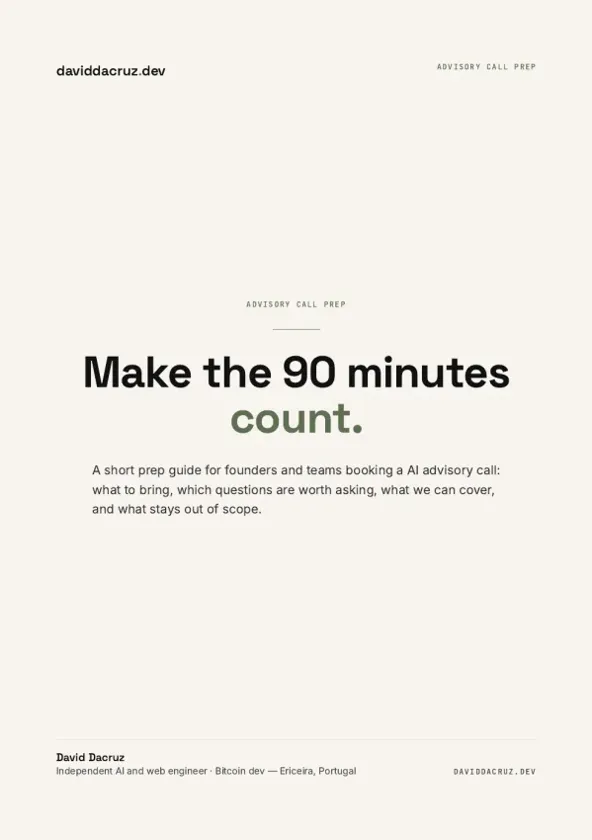
Free PDF
AI Advisory Call Prep Guide
Make the 90 minutes count.
6 pages · PDF Inside:
Quick breakdown of the workflows, stack choices, and where the hours come back first.