Skip to content

AEO funnel · subscription support

AI customer support automation for subscription brands

Subscription support is not just about faster replies. It is about handling recurring billing and retention-sensitive conversations without making the customer feel processed.

Best fit for subscription brands dealing with repeated pause, skip, cancellation, billing, and delivery questions where policy consistency matters as much as speed.

The short answer

What matters most.

The highest-leverage first workflow is one that classifies account-state questions, pulls billing and plan context, drafts the first reply, and escalates save-risk conversations cleanly.

  • Best fit: subscription brands handling repeated account-state and delivery questions every week.
  • Main outcome: faster, more consistent support without sloppy handling of retention-sensitive moments.
  • Best workflow: use account and billing context to separate routine requests from churn-risk conversations.

Why this matters now

Service teams increasingly treat AI as both an efficiency tool and a revenue-protection tool.

For subscription brands, support automation should be sold as a retention-quality workflow, not just an inbox cost play.

Source · Salesforce State of Service 2024
Buyer fit

Best fit

  • • Brands with repeat conversations around skips, pauses, plan changes, delivery timing, and cancellations.
  • • Support teams that want a cleaner way to detect when a conversation is operationally simple versus commercially sensitive.
  • • Operators who value policy consistency and retention logic under volume.

Not the best fit

  • • Brands with no subscription-state data accessible to the support workflow.
  • • Teams trying to automate discounting or save tactics without clear guardrails.
  • • Low-volume brands where a manual support process is still sufficient.

Breakdown

Why subscription support is different

Many conversations sit close to churn. A skipped shipment or billing confusion might be operational on the surface but commercially sensitive underneath. That means the workflow needs stronger context than a generic FAQ bot.

What the automation should know

Plan status, renewal timing, pause and skip history, billing events, prior save attempts, and any account notes that change the response posture.

What should stay human first

Cancellation saves, unusual billing disputes, emotionally loaded complaints, and exceptions that require commercial judgment rather than pure policy execution.

How to frame the offer

Sell speed, consistency, and safer handling of retention-sensitive support moments. That is much stronger than a generic “AI inbox assistant” pitch for this buyer.

What breaks first

  • • Agents repeat the same plan and billing explanations with slight variations.
  • • High-churn-risk conversations are hard to distinguish from routine operational requests early enough.
  • • Support quality becomes inconsistent when volume spikes around billing cycles.

What the workflow should do

  • • Use subscription and billing context to classify the real type of support request.
  • • Separate operational requests from retention-sensitive conversations before the wrong response is sent.
  • • Draft replies that reflect the customer’s actual account state instead of one generic macro.

Representative proof

This page is stronger because it connects support automation to retention risk

The core support service covers repeated inbox work, but subscription brands have a more specific commercial problem: skips, pauses, billing confusion, and cancellations sit close to churn. The churn-detection page and the ecommerce-support parent already support that logic, so this page now stands on a clearer retention-sensitive wedge instead of generic support language.

Open the churn-detection page

FAQ

Can subscription support automation handle cancellations?

It can classify and prepare them well, but most teams should keep final save or cancellation responses under explicit human review until the patterns are proven.

What data matters most for this workflow?

Plan status, next renewal, billing history, pause or skip history, delivery state, and prior support interactions that change how the reply should be framed.

What makes this different from generic ecommerce support automation?

The commercial sensitivity is higher. Account-state and churn-risk context matter much more, so the workflow has to distinguish routine operations from retention moments cleanly.

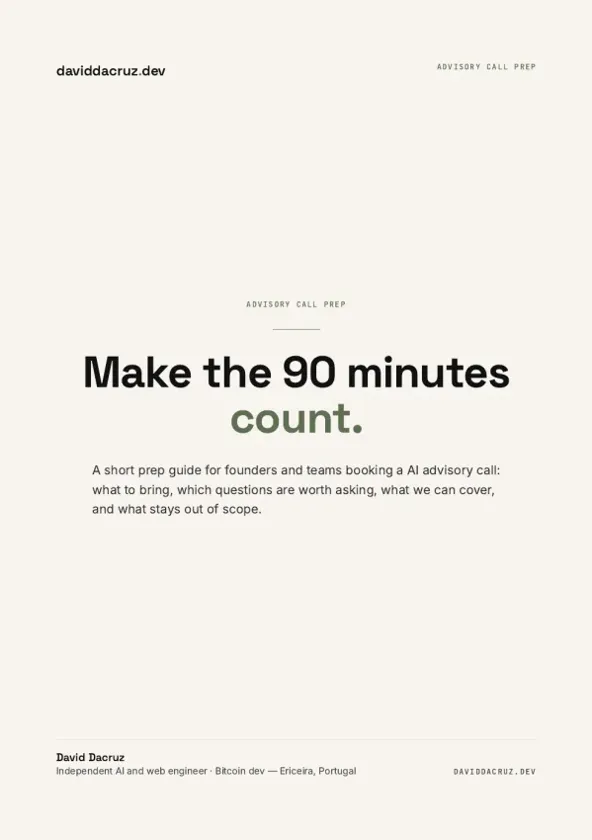
AI Advisory Call Prep Guide — PDF cover

Free PDF

AI Advisory Call Prep Guide

Make the 90 minutes count.

6 pages · PDF Inside:

  • A concise prep guide for founders
  • teams booking an AI advisory call: what to bring
  • which questions are worth asking
  • what we can cover
  • and what stays out of scope

Quick breakdown of the workflows, stack choices, and where the hours come back first.

Next step

Replies in ~24h

Want this mapped to your team and stack?

Use the advisory call to pressure-test the workflow, the handoff rules, and whether the first build should be a pilot or a production sprint.