Skip to content

AEO funnel · multilingual support

Multilingual customer support automation for ecommerce

Multilingual support automation matters when language differences slow the queue down before the real support work even starts.

Best fit for ecommerce brands with cross-border demand, repeat support categories, and enough non-primary-language tickets that translation and consistency have become operational bottlenecks.

The short answer

What matters most.

The right workflow classifies the issue, translates when needed, pulls order context, drafts the reply in the correct language, and flags risky categories for human review.

  • Best fit: ecommerce teams receiving recurring support requests in multiple languages.
  • Main outcome: faster multilingual handling without adding more manual translation work.
  • Key rule: automate translation and triage, but keep explicit review rules on risky categories.

Why this matters now

Service organizations are using AI to handle higher expectations with fewer wasted touches.

For multilingual support, the clearest value is reduced queue friction and more consistent first handling across languages.

Source · Salesforce State of Service 2024
Buyer fit

Best fit

  • • Brands with enough multilingual support volume that translation and context assembly now slow the queue measurably.
  • • Teams that want a stronger first layer before handing complex cases to native-speaking agents.
  • • Operators whose repeat support categories are already clear enough to define safe review rules.

Not the best fit

  • • Brands with only occasional multilingual tickets.
  • • Businesses wanting full automation on sensitive financial or dispute cases across languages immediately.
  • • Teams without usable policy or fulfillment context for the workflow to ground itself in.

Breakdown

Where multilingual support gets expensive

Not only in translation itself, but in the delay and inconsistency caused when the agent first has to understand the issue, find the context, and then rewrite the answer correctly in another language.

What the workflow should automate

Language detection, ticket classification, context gathering, draft generation in the right language, and review flagging where mistakes would be costly.

What should remain human

Escalations, emotionally loaded cases, nuanced compensation offers, and categories where policy ambiguity is still too high. Translation speed is not a substitute for judgment.

How to sell this page

Sell queue speed, multilingual consistency, and cleaner handoffs across languages. That is much more concrete than a generic claim about “global AI support.”

What breaks first

  • • Support slows down because non-primary-language tickets require extra translation and interpretation work before action starts.
  • • Reply quality varies too much depending on which agent can handle the language.
  • • Context and policy accuracy are harder to preserve across languages under volume.

What the workflow should do

  • • Detect language and issue type before a human starts from scratch.
  • • Draft grounded replies in the right language using real order and policy context.
  • • Escalate risky categories before the wrong multilingual response is sent.

Representative proof

This page is credible because the language problem is operational, not cosmetic

The ecommerce-support parent page already covers the broad support case. This variant earns its place by narrowing the problem to language detection, translated drafting, and multilingual review rules. That is a real queue-design problem for cross-border brands, not just a translated version of the same page.

Open the ecommerce support parent page

FAQ

Can multilingual support automation translate replies accurately enough?

Usually yes for repeated operational categories if the workflow has strong grounding in order and policy context. High-risk categories should still route through human review first.

What is the safest first use case?

Order status, shipping updates, returns instructions, and other repeat categories where the policy logic is clear and stable.

What should be measured first?

Response time by language, classification accuracy, percentage of tickets requiring manual translation, and escalation quality on risky multilingual cases.

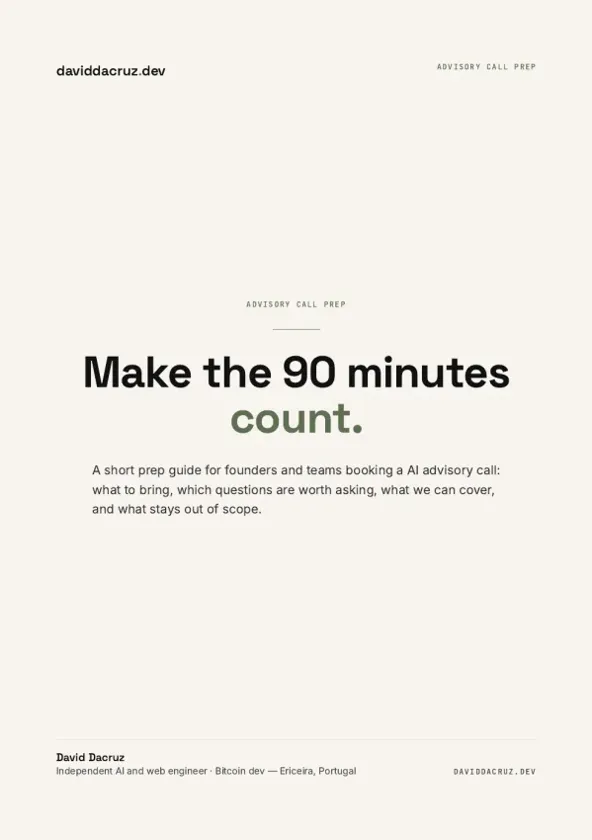
AI Advisory Call Prep Guide — PDF cover

Free PDF

AI Advisory Call Prep Guide

Make the 90 minutes count.

6 pages · PDF Inside:

  • A concise prep guide for founders
  • teams booking an AI advisory call: what to bring
  • which questions are worth asking
  • what we can cover
  • and what stays out of scope

Quick breakdown of the workflows, stack choices, and where the hours come back first.

Next step

Replies in ~24h

Want this mapped to your team and stack?

Use the advisory call to pressure-test the workflow, the handoff rules, and whether the first build should be a pilot or a production sprint.