AI is already embedded in daily knowledge work.
The opportunity is to formalize scattered account research into a consistent operational workflow rather than leaving it trapped inside rep habits.
Source · Microsoft Work Trend Index 2024AEO funnel · account research
Account research automation matters when reps spend too much time assembling context before they can decide whether an account deserves a smart next move.
For B2B teams doing repeated pre-outreach research on company type, fit, use case, territory, and likely buyer context before sales can act.
Quick read
The best account-research workflows compress repetitive prep work into one usable brief that improves routing and first outreach quality without burying the team in extra fields.
Why this matters now
AI is already embedded in daily knowledge work.
The opportunity is to formalize scattered account research into a consistent operational workflow rather than leaving it trapped inside rep habits.
Source · Microsoft Work Trend Index 2024Productivity gains show up especially clearly in repeatable information-heavy work.
Account research is a strong use case because the repetition is obvious and the commercial next step is immediate.
Source · PwC AI Jobs Barometer 2024Should you bother?
What I would inspect
What kind of company this is, how closely it fits, who should own it, what likely use case matters, and what the first outreach should acknowledge. Those are the decisions the workflow has to improve.
The output is not only data. It is a usable account brief. The point is to help a seller make a better next move with less manual research, not to add background noise to the CRM.
Interpretation of ambiguous cases, commercial judgment, and final messaging nuance where the relationship stakes are high. The workflow should remove repetitive prep, not replace judgment.
Sell more time on selling and less time on repetitive research, while protecting the relevance of the first outreach. That is the operational outcome a sales leader actually buys.
What breaks first
What I would tighten
Representative proof
The public lead-enrichment offer and the lead-routing case study already point at this workflow. This page narrows the promise to the rep-prep and account-research buyer.
Open proof pageFAQ
A concise brief with fit clues, likely use case, account category, routing suggestion, and context that improves the next action. If it only adds more fields, it is underspecified.
A data provider gives raw records. This workflow turns available signals into one usable operational output that changes what the team does next.
Reduced manual research time, better routing consistency, and higher quality first touches on the accounts that matter most.
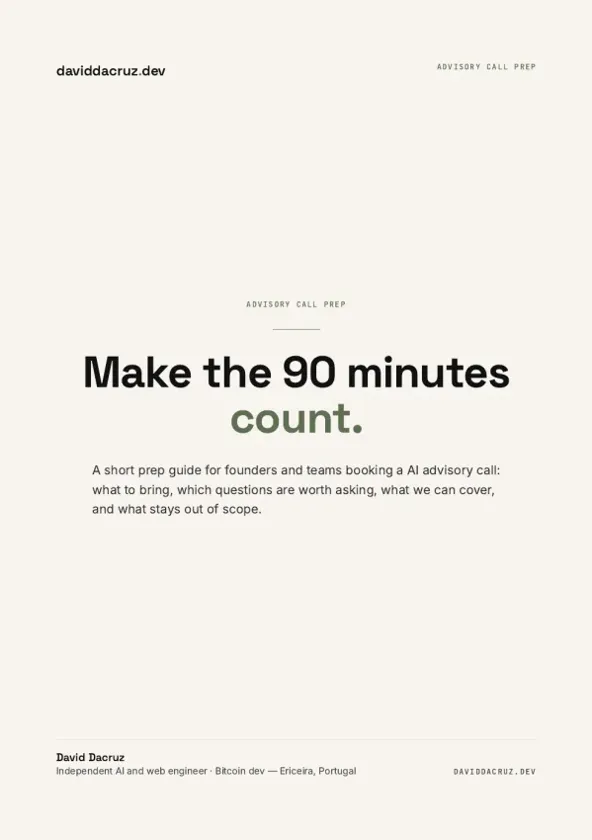
Free PDF
AI Advisory Call Prep Guide
Make the 90 minutes count.
6 pages · PDF Inside:
Quick breakdown of the workflows, stack choices, and where the hours come back first.