Skip to content

AEO funnel · inbound routing

Lead routing automation for inbound sales teams

If inbound ownership is slow or inconsistent, better routing often creates more value faster than adding one more rep.

Best fit for teams where the first ten minutes after a form fill matter, but the correct owner or playbook is still decided manually.

The short answer

What matters most.

Routing automation should answer four things fast: who owns the lead, how urgent it is, what context matters, and what the next step should look like.

  • Best fit: inbound teams with enough lead volume that ownership and prioritization drift under speed pressure.
  • Main outcome: fewer slow or misrouted leads and cleaner first touches.
  • Strong first build: normalize, enrich, prioritize, assign, and prepare the next action in one workflow.

Why this matters now

AI is showing the strongest value where it improves repetitive knowledge work productivity.

Lead routing is a strong candidate because it sits at the intersection of repeated decision rules and real commercial consequence.

Source · PwC AI Jobs Barometer 2024
Many organizations are still piloting AI rather than scaling it cleanly.

This page should sell a narrow operational win, not broad AI ambition. Buyers need one workflow that survives reality first.

Source · McKinsey State of AI 2025

Buyer fit

Best fit

  • • Inbound sales teams with shared ownership queues or manual assignment rules.
  • • Teams where response speed matters but the wrong lead handoff is expensive.

Not the best fit

  • • Very low-volume pipelines where manual routing is still trivial.
  • • Teams with unresolved ownership politics that no workflow can fix.

Breakdown

The hidden cost of bad routing

A slow or messy first handoff wastes the highest-intent moment in the pipeline. Even when the lead eventually reaches the right rep, the first reply quality usually suffers because the context arrived late or incomplete.

What routing should automate

Normalize the submission, enrich the account, detect urgency, pick the owner, and draft the immediate next step. Those steps are repetitive enough to automate and valuable enough to matter.

What not to automate first

Do not jump straight to autonomous sales conversations. The first gain comes from better internal decisions and faster preparation, not from pretending a bot should run discovery.

How to frame the buyer outcome

Sell speed, ownership clarity, and better first-touch relevance. Those are easier to defend internally than broad “AI sales” claims.

What breaks first

  • • High-intent leads wait because the system does not know who should own them yet.
  • • Reps spend time triaging instead of responding.
  • • Ownership rules break under geography, segment, or product complexity.

What the workflow should do

  • • Score urgency and fit before assignment.
  • • Route based on explicit ownership logic instead of first-come inbox behavior.
  • • Prepare the context the owner needs before outreach starts.

Representative proof

The inbound ops story already exists on the site

The AI lead enrichment and routing case study is the closest proof point. This page turns that story into a direct offer-led landing page for routing buyers.

Open proof page

FAQ

What inputs should a routing workflow consider?

Usually source, geography, company type, likely use case, account size, urgency, existing CRM history, and whether the lead belongs to a named owner or shared queue.

Should routing automation also draft the first response?

Often yes. Once the system has enough context to assign ownership, it can usually prepare a more relevant first touch as well.

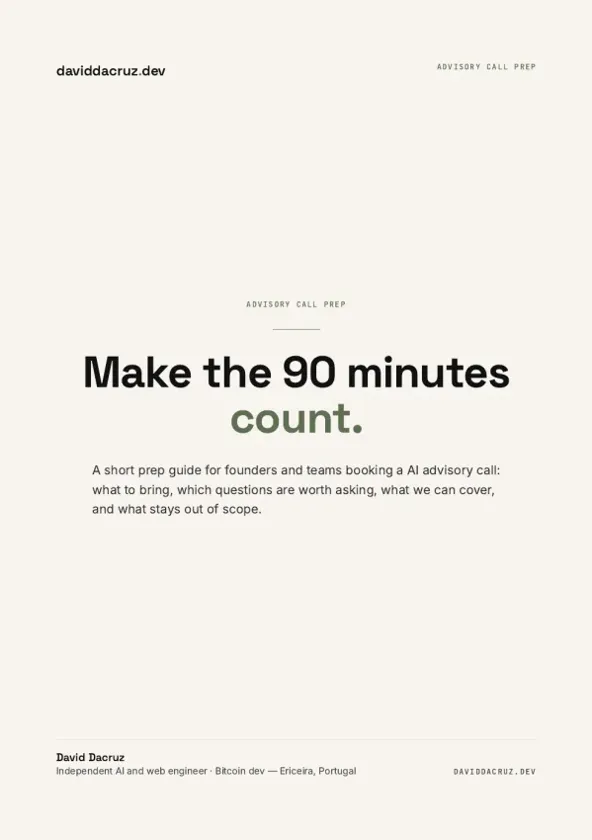
AI Advisory Call Prep Guide — PDF cover

Free PDF

AI Advisory Call Prep Guide

Make the 90 minutes count.

6 pages · PDF Inside:

  • A concise prep guide for founders
  • teams booking an AI advisory call: what to bring
  • which questions are worth asking
  • what we can cover
  • and what stays out of scope

Quick breakdown of the workflows, stack choices, and where the hours come back first.

Next step

Replies in ~24h

Want this mapped to your team and stack?

Use the advisory call to pressure-test the workflow, the handoff rules, and whether the first build should be a pilot or a production sprint.