What is the cheapest useful first step?
Usually either a low-cost advisory call if the workflow is still unclear, or a narrow pilot if the process is already visible enough to test on real inputs.
Cost guide · AI automation
The number on the quote usually reflects three things: workflow ambiguity, integration depth, and the cost of getting it wrong. A useful AI automation consultant is not selling prompts. They are selling workflow judgment plus production delivery.
The short answer
Expect fixed-scope prices to make more sense than hourly rates for narrow workflows. If someone cannot define the first useful workflow, the pricing model is not your real problem yet.
Buyer fit
Breakdown
A narrow production workflow usually sits in the low-thousands, not the high-tens-of-thousands. The point is to ship one useful thing before building a platform around it.
Complex integrations, regulated data, human-review rules, monitoring, dashboards, and messy upstream data all raise cost more than the model call itself.
Hourly works for advisory and discovery. Fixed pricing works better for delivery because both sides can define what “live” means.
If the quote is full of vague AI language but thin on workflow details, the problem is probably still underscoped.
What breaks first
What the workflow should do
Representative proof
The AI Automation Sprint, Pilot, and advisory call are all priced against specific handoff patterns rather than vague AI capability promises. That is the logic this cost page is meant to explain.
See AI Automation pricingBest next step
Usually strongest when the workflow still needs a trigger, owner, and handoff path before a build.
Most useful when one small workflow can be tested on real inputs before a full sprint.
Usually strongest when one production workflow is clear enough to ship in a fixed-scope engagement.
FAQ
Usually either a low-cost advisory call if the workflow is still unclear, or a narrow pilot if the process is already visible enough to test on real inputs.
Mostly for discovery, scoping, or advisory work. Once the workflow is clear enough to define a real deliverable, fixed pricing usually produces a cleaner buying decision.
Messy upstream data, multiple integrations, regulated or risky review requirements, and unclear definitions of what the workflow should do in edge cases.
Keep reading
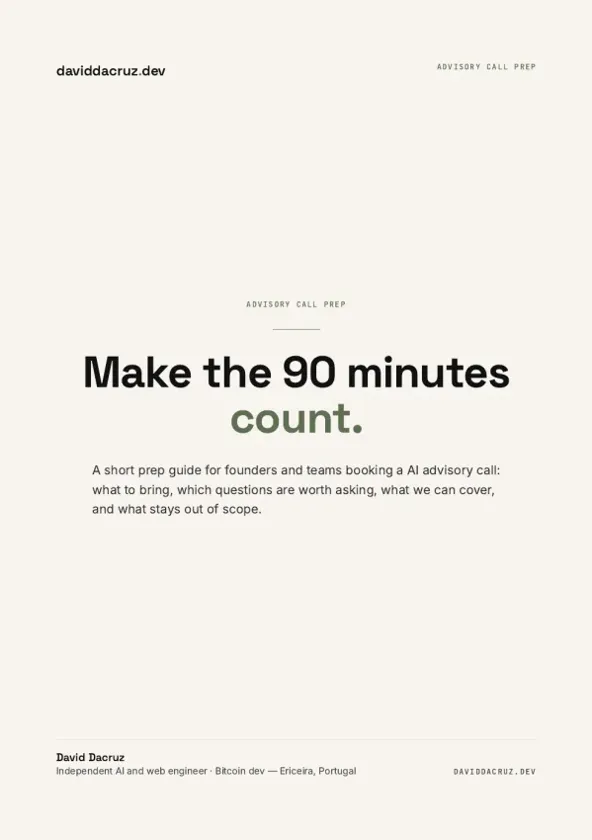
Free PDF
AI Advisory Call Prep Guide
Make the 90 minutes count.
6 pages · PDF Inside:
Quick breakdown of the workflows, stack choices, and where the hours come back first.