Google describes structured data as explicit clues about page meaning.
The commercial value comes from strategy and consistency, not from scattered markup added without a page model.
Source · Google Search Central structured data guideSchema strategy for AI search
Schema strategy for AI search is not about adding every possible property. It is about matching structured data to the page types that should be easiest for machines to interpret, compare, and recommend.
For sites with multiple commercial page types where schema exists inconsistently, is missing on key templates, or is not tied to a clear parent-child content model.
Quick read
The useful schema strategy maps markup to the pages that matter most: parent commercial pages, high-intent child pages, pricing pages, comparison pages, FAQs, and proof pages.
Why this matters now
Google describes structured data as explicit clues about page meaning.
The commercial value comes from strategy and consistency, not from scattered markup added without a page model.
Source · Google Search Central structured data guideAI search still relies on core site quality and strong page signals.
Schema should support the page model, not try to replace weak structure or weak content.
Source · Google Search Central AI features guideShould you bother?
What I would inspect
Choosing which page types deserve which markup, how that markup matches visible content, and how it scales across templates without becoming messy or misleading.
They add markup page by page without deciding which pages matter most or how the schema should reinforce the real page structure.
Usually service pages, pricing pages, comparison pages, FAQs, proof pages, and the strongest supporting pages around those offers.
The goal is a schema system that supports the whole site, not a one-off cleanup that falls apart the next time a template changes.
What breaks first
What I would tighten
Representative proof
The existing structured-data consulting page sells the implementation layer. This page moves one level up and frames the actual strategy question buyers often have before they commit to implementation.
Open structured data consulting for AI searchFAQ
Strategy decides which page types deserve which markup and why. Implementation is the actual template work once that model is clear.
No. The strongest approach is to prioritize the templates where explicit meaning matters most and where the markup aligns cleanly with the visible content.
Only partially. It works best when the underlying page quality and structure are already strong enough to deserve clearer machine-readable representation.
Free PDF
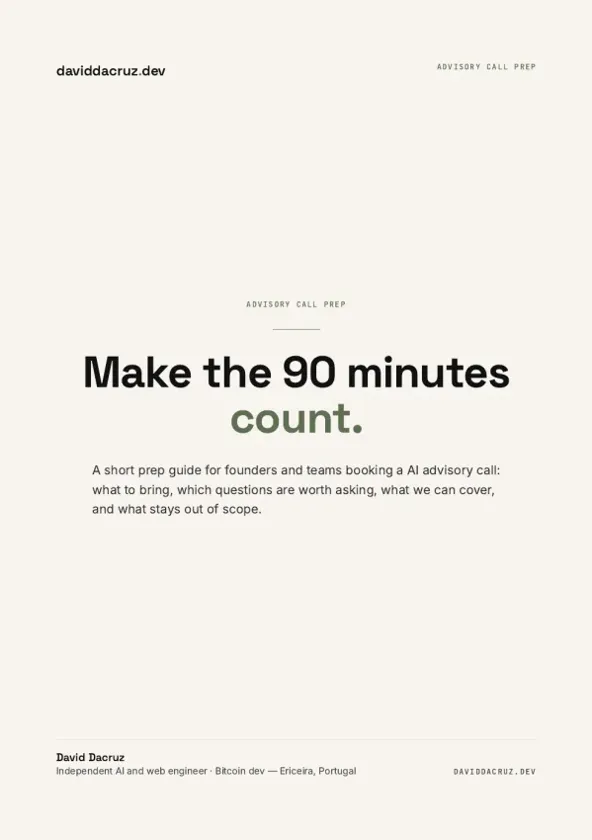
AI Advisory Call Prep Guide
Make the 90 minutes count.
6 pages · PDF Inside:
Quick breakdown of the workflows, stack choices, and where the hours come back first.