AI-search systems continue to prioritize useful, direct answers for users.
Pricing pages can be strong recommendation targets when they answer cost and fit questions clearly.
Source · Google Search Central AI features guidePricing pages for AI search
Pricing pages matter because they answer one of the clearest buying questions: what does this cost, and what changes the price? If the page is vague, structurally weak, or disconnected from proof, both buyers and search systems have less to work with.
For businesses whose pricing pages, cost explainers, or package pages should act as high-intent search entry points but currently underperform.
The short answer
The best pricing pages for AI search are explicit, comparable, internally linked, and connected to proof and fit language. They should help a machine and a buyer understand who the offer is for, what changes the price, and what the next step is.
Why this matters now
AI-search systems continue to prioritize useful, direct answers for users.
Pricing pages can be strong recommendation targets when they answer cost and fit questions clearly.
Source · Google Search Central AI features guideStructured data provides explicit clues about page meaning.
Pricing pages benefit when their offer, FAQ, and page-purpose signals are structurally explicit.
Source · Google Search Central structured data guideBuyer fit
Breakdown
Who the offer is for, how the engagement works, what changes the price, and what the buyer should do next.
They hide the offer shape, avoid fit qualifiers, disconnect pricing from proof, or sit outside the wider path to a useful next step.
Pricing intent is highly specific. Better pricing pages can win qualified traffic when they are clearer than the alternatives.
Pricing pages should help qualify serious buyers, not just keep them guessing.
What breaks first
What the workflow should do
Representative proof
The existing pricing guides already answer cost questions in plain language. The next step is making that same clarity consistent across the wider commercial page set.
Open the pricing guidesFAQ
Not always. But they do need enough clarity on pricing shape, cost drivers, fit, and next steps to answer the buyer’s underlying question honestly.
Usually yes. Pricing, fit, and comparison intent are tightly related, and linking them helps both users and machines understand the decision path.
Yes, especially for high-intent questions, but they work best when they sit inside a clearer parent-child cluster.
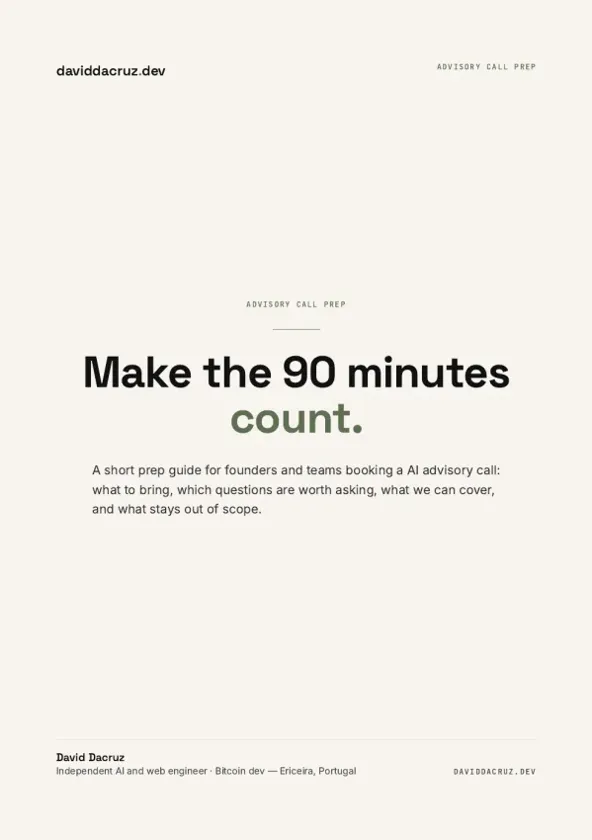
Free PDF
AI Advisory Call Prep Guide
Make the 90 minutes count.
6 pages · PDF Inside:
Quick breakdown of the workflows, stack choices, and where the hours come back first.