How small should an AI pilot be?
Small enough that it can run on real inputs with one clear success metric, but large enough that the output changes a real operational action.
Definition · AI delivery
An AI pilot is a narrow, real workflow run on real inputs with a clear pass/fail threshold. It is not a deck, not a prototype, and not a prompt in a sandbox. Its job is to prove whether the pattern is worth turning into production infrastructure.
The short answer
A good AI pilot is deliberately small and operationally honest. If it cannot survive real inputs for one workflow, it is not a pilot. It is a demo.
Buyer fit
Breakdown
One trigger, one model step, one action, and enough logging or review to judge whether the output is usable in the real process.
Whether the workflow reduces manual handling or improves quality under normal operating conditions, not whether AI can do something impressive in a one-off session.
Big platform thinking, broad change-program language, and multi-workflow sprawl. A pilot should make a later decision easier, not postpone it.
If the pilot works, you productionize. If it fails, you either narrow the workflow further or stop. Both are good outcomes if they happen quickly.
What breaks first
What the workflow should do
Representative proof
The AI Automation service already frames the pilot as one trigger, one model step, and one action shipped on real inputs in a few days. This definition page is the plain-English version of that delivery model.
See the AI Automation SprintFAQ
Small enough that it can run on real inputs with one clear success metric, but large enough that the output changes a real operational action.
Usually yes. Human review is part of what tells you whether the workflow is genuinely usable, not just superficially impressive.
If it works, you productionize. If it does not, you either narrow the scope further or stop and save yourself a bigger implementation mistake.
Keep reading
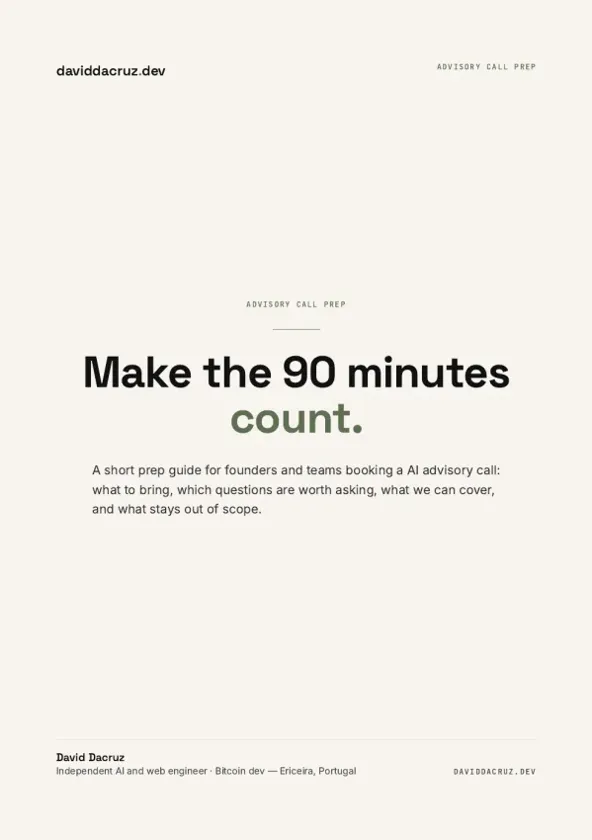
Free PDF
AI Advisory Call Prep Guide
Make the 90 minutes count.
6 pages · PDF Inside:
Quick breakdown of the workflows, stack choices, and where the hours come back first.