Most organizations are still early in scaling AI, even as adoption becomes widespread.
The page should sell one concrete operational win in inbound handling, not a larger AI change story.
Source · McKinsey State of AI 2025AEO funnel · SaaS qualification
Inbound qualification automation is valuable when it helps the team decide who should respond, how fast, and with what context before the lead cools off.
For SaaS teams where demo requests, trial signups, and contact forms arrive with uneven quality and still need manual qualification before follow-up.
The short answer
The right first build is one that standardizes qualification and routing without flattening every lead into the same response path.
Why this matters now
Most organizations are still early in scaling AI, even as adoption becomes widespread.
The page should sell one concrete operational win in inbound handling, not a larger AI change story.
Source · McKinsey State of AI 2025AI’s productivity effects are strongest where the work is structured and repeatable.
Inbound qualification is a clean productivity case because the workflow is repeated constantly and tied to revenue quality.
Source · PwC AI Jobs Barometer 2024Buyer fit
Breakdown
Urgency, fit, owner, next step, and message quality. The real outcome is a better first action, not a prettier lead record.
Qualification logic lives across forms, Slack messages, rep habits, and sales-manager intuition. That makes speed and consistency too dependent on who sees the lead first.
Normalize the record, enrich the account, infer likely fit, assign the right owner, and draft the next step. Keep the logic simple enough that the team still trusts it.
Sell cleaner prioritization and faster relevant response. Those are outcomes the buyer can defend internally more easily than generic AI claims.
What breaks first
What the workflow should do
Representative proof
The lead enrichment and routing case study is the clearest representative proof because it already frames messy inbound as an operational workflow, not a vague AI promise.
Open proof pageFAQ
Usually form inputs, company context, geography, product-fit clues, CRM history, account size, urgency indicators, and any source data that changes the first response or owner.
No. It should improve the quality of the first internal decision and save reps from repetitive prep, not hide the reasoning behind important pipeline choices.
Time to qualified first touch, percentage of leads routed correctly, and the reduction in manual research before a rep can send a relevant response.
Free PDF
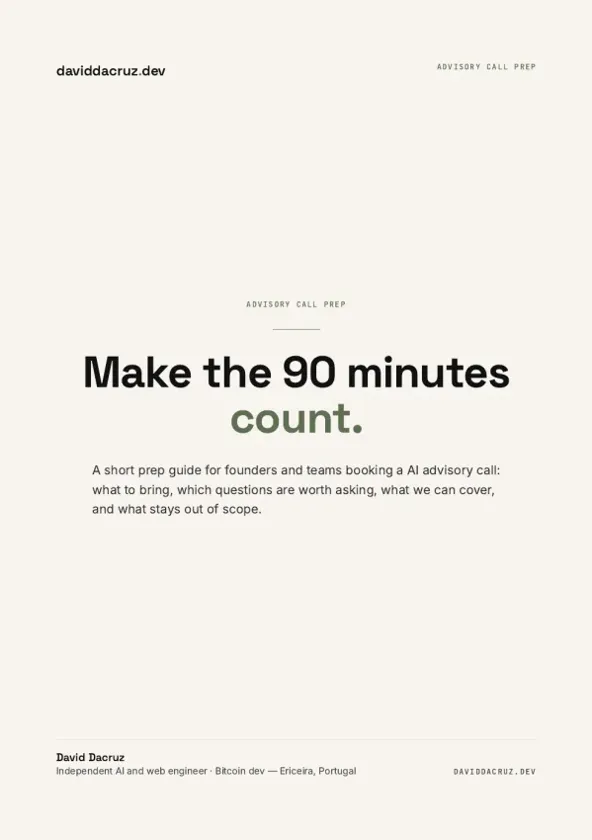
AI Advisory Call Prep Guide
Make the 90 minutes count.
6 pages · PDF Inside:
Quick breakdown of the workflows, stack choices, and where the hours come back first.