When is an SEO agency the better fit?
Usually when the technical path is already understood and the main need is broader scale across editorial production, outreach, or multiple specialist functions.
SEO · buying decision
If the real problem is technical debt, schema, indexing, internal links, crawl paths, or content architecture, you usually want the person who can diagnose and ship. That is not always the agency model.
The short answer
Use a consultant when the site itself needs fixing. Use an agency when the main constraint is content production scale or link acquisition volume rather than hands-on implementation.
Buyer fit
Breakdown
A technical consultant can often read the stack, write the fix, and validate the change directly. Agencies often stop at recommendations unless engineering is already in-house.
Agencies are structurally incentivized to produce reporting. Consultants are structurally incentivized to remove the underlying issue and move on.
Consultants fit product sites, SaaS, content businesses, and custom frameworks. Agencies fit larger editorial machines and broader search programs with multiple specialists.
The weak agency sends a deck. The weak consultant over-focuses on esoterica. The winning setup is clear scope plus implementation ownership.
What breaks first
What the workflow should do
Representative proof
The technical SEO and AI consulting service, the AI search audit, and the public case studies all focus on finding the issue, fixing the structure, and validating the result instead of just reporting on it.
See SEO and AI consultingFAQ
Usually when the technical path is already understood and the main need is broader scale across editorial production, outreach, or multiple specialist functions.
A strong consultant can often inspect the stack, isolate the structural issue, implement or specify the fix clearly, and validate the effect with much less process overhead.
Paying for a broad SEO package when the actual issue is technical structure that still needs direct implementation ownership.
Keep reading
Free PDF
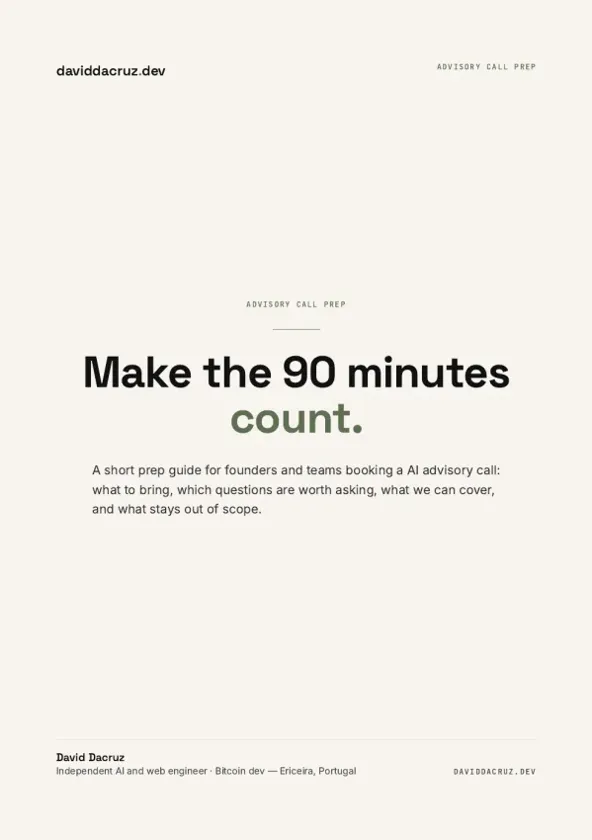
AI Advisory Call Prep Guide
Make the 90 minutes count.
6 pages · PDF Inside:
Quick breakdown of the workflows, stack choices, and where the hours come back first.