When should a team hire internally first?
When the workflow category is already validated, recurring, and important enough to justify ongoing full-time ownership rather than a one-time project.
AI automation · team design
Most teams should not hire first. They should ship first. A consultant is usually the fastest way to prove the workflow and expose the real maintenance burden before you create a permanent headcount decision around it.
The short answer
Bring in a consultant when you need the first workflow live in weeks, not quarters. Build in-house when the workflow category is already validated and you know there is enough ongoing volume to justify full-time ownership.
Buyer fit
Breakdown
Consultants usually win here. They bring a workflow pattern, stack choices, and prior implementation mistakes to avoid. Hiring internally means sourcing, interviewing, onboarding, and only then discovering the shape of the problem.
In-house wins once the workflow has become recurring infrastructure. If the automation becomes a system you will tune every month, internal ownership compounds.
The in-house risk is hiring before the workflow is real. The consultant risk is shipping something useful that nobody internally is ready to own. The right answer is often consultant-first, team-second.
A fixed-scope consultant project is cheaper than a bad hire and cheaper than six months of indecision. Internal hiring becomes cheaper only after the problem is already clear and ongoing.
What breaks first
What the workflow should do
Representative proof
The advisory call, pilot, and sprint structure are built for teams that need to clarify and ship the first workflow before turning it into a staffing decision.
Open the AI Automation serviceFAQ
When the workflow category is already validated, recurring, and important enough to justify ongoing full-time ownership rather than a one-time project.
Because it reveals the real handoff break, maintenance burden, and integration complexity before you lock in a permanent headcount decision.
That the team ships something valuable without being ready to own it afterwards. That is why documentation, handoff, and internal process adoption matter.
Keep reading
Free PDF
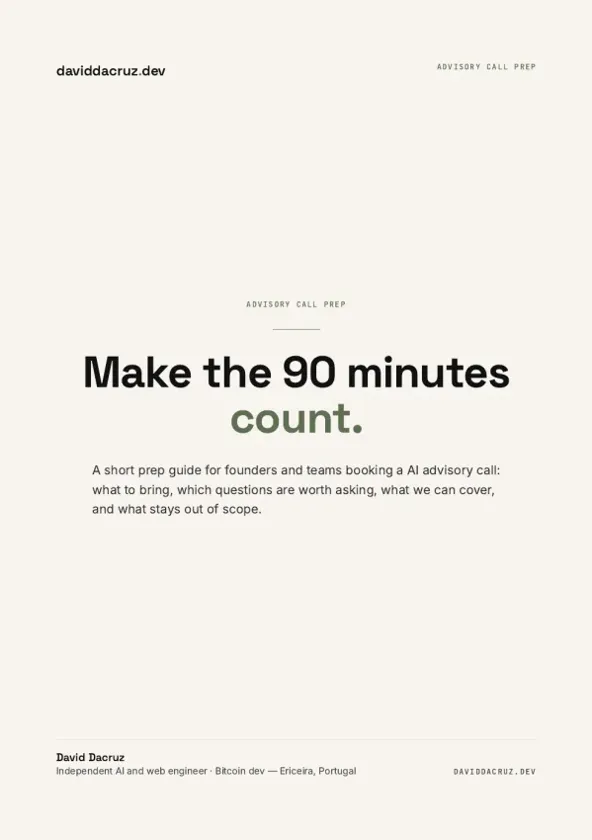
AI Advisory Call Prep Guide
Make the 90 minutes count.
6 pages · PDF Inside:
Quick breakdown of the workflows, stack choices, and where the hours come back first.