When is an agency the better choice?
Usually when the strategy is already clear and the real need is parallel execution across several channels, stakeholders, or workstreams at once.
AI automation · buying decision
This decision is usually about operating model, not talent. The consultant path gives you direct access to the person diagnosing and building the workflow. The agency path gives you more capacity, but also more meetings, handoffs, and delay.
The short answer
Choose the consultant route when the problem is valuable and still ambiguous. Choose an agency only when you truly need parallel execution across multiple channels at once.
Buyer fit
Breakdown
A consultant usually prices the actual problem. An agency prices the production system around the problem: PMs, strategy layers, meetings, status wrappers, and margin across multiple people.
Consultants make decisions in the same conversation where they understand the issue. Agencies usually route decisions across account, strategy, and delivery layers before anything changes.
Consultants fit founder-led teams, SaaS companies, and operators who need one workflow shipped cleanly. Agencies fit broader programs where several people need to execute in parallel.
A weak consultant can improvise too much. A weak agency can turn a simple workflow into weeks of meetings. The agency version often costs more before you notice it is drifting.
What breaks first
What the workflow should do
Representative proof
The AI Automation Sprint, advisory call, and workflow-specific service pages all focus on finding the bottleneck, building the workflow, and handing over something the team can use.
See the AI Automation SprintFAQ
Usually when the strategy is already clear and the real need is parallel execution across several channels, stakeholders, or workstreams at once.
Tighter diagnosis, fewer handoffs, and faster implementation decisions. That matters most when the workflow is still ambiguous and needs judgment, not just labor.
That process layers and account management slow the actual structural changes, especially when the work still needs technical clarity more than production throughput.
Keep reading
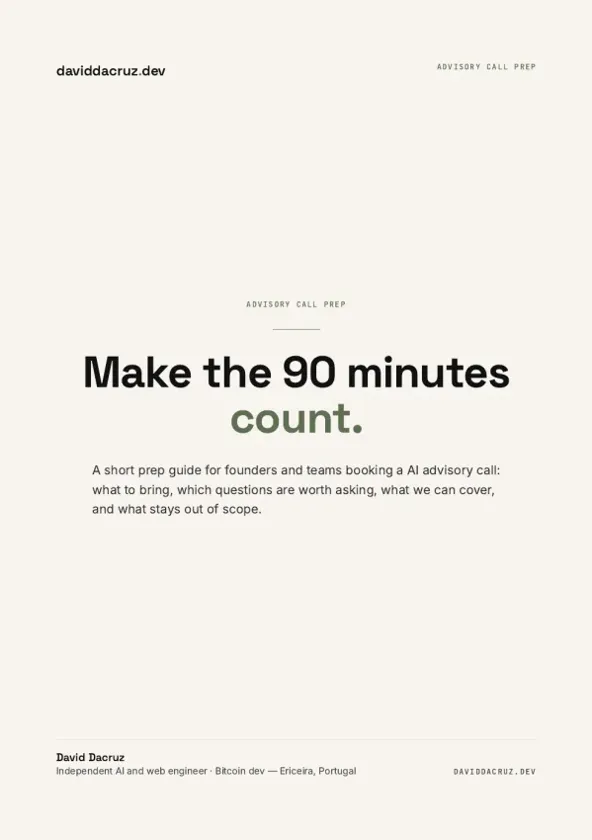
Free PDF
AI Advisory Call Prep Guide
Make the 90 minutes count.
6 pages · PDF Inside:
Quick breakdown of the workflows, stack choices, and where the hours come back first.