Is onboarding automation just email sequencing?
No. Email can be one output, but the workflow is broader: product signals, segmentation, task creation, alerts, prompts, and selective human intervention.
Definition · product ops
Onboarding automation is the use of product signals, messaging rules, and workflow logic to help new users reach their first meaningful success point faster. It can include checklists, triggered emails, in-app prompts, segmentation, task creation, and human follow-up when risk is high.
The short answer
The point of onboarding automation is not to send more messages. It is to shorten the path to activation without making the user feel trapped inside a generic sequence.
Buyer fit
Breakdown
Milestone reminders, role-based onboarding paths, task prompts, CRM updates, success-team alerts, and follow-up logic when a user stalls before activation.
You need clear activation events, product instrumentation, and at least a rough model of where users usually get stuck. Without those, the workflow becomes guesswork.
Too many generic nudges, weak segmentation, and automating around unclear product friction instead of fixing the underlying friction itself.
More users complete the key setup steps, success teams spend less time chasing obvious tasks, and high-risk accounts get noticed early enough for a human to help.
What breaks first
What the workflow should do
Representative proof
The onboarding-automation service already frames this work as product-signal detection, milestone messaging, and human escalation where needed. This definition page widens discovery around the term while staying commercially aligned to that offer.
See onboarding automationFAQ
No. Email can be one output, but the workflow is broader: product signals, segmentation, task creation, alerts, prompts, and selective human intervention.
Activation rate, time to first value, milestone completion, and whether high-risk accounts are being surfaced early enough for a human to help.
When the product is high-touch, implementation-heavy, or the path to first value is too custom to map with simple behavioral rules yet.
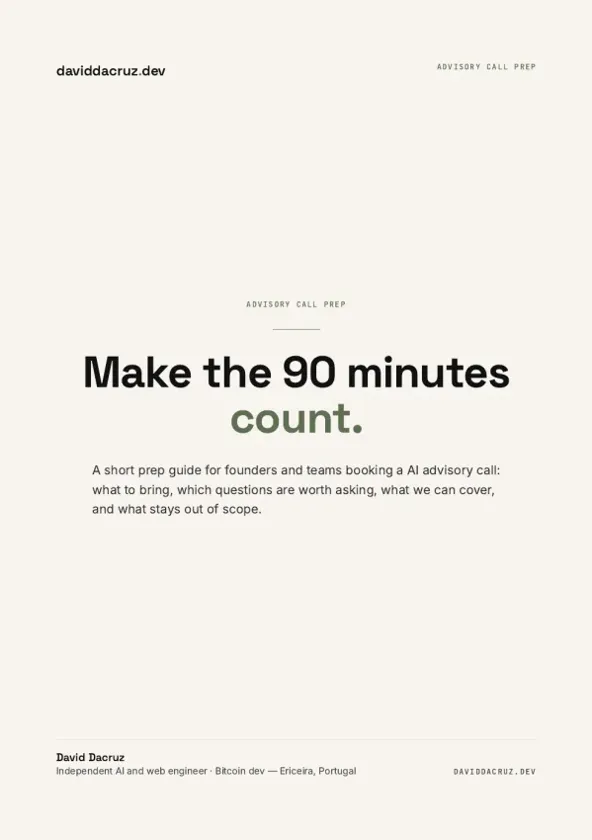
Free PDF
AI Advisory Call Prep Guide
Make the 90 minutes count.
6 pages · PDF Inside:
Quick breakdown of the workflows, stack choices, and where the hours come back first.